Elegance of Oxidised Jewellery Sets
Jewellery has been an integral part of human history, serving as a symbol of beauty, status, and cultural significance. Among the myriad of jewellery styles, Oxidised jewellery has gained a lot of popularity in recent times. In this exploration of Oxidised jewellery sets, we delve into its origins, manufacturing process, characteristics, and contemporary relevance.
History behind Oxidised Jewellery
Oxidised jewellery traces its roots back to ancient civilizations, with evidence of its existence in cultures across the globe. From the Mesopotamian era to the Indus Valley Civilization and ancient Egypt, people adorned themselves with Oxidised ornaments, reflecting their craftsmanship and artistic creativity.
The Art of Oxidation & Exquisite Craftsmanship
The defining feature of Oxidised jewellery lies in its distinct darkened appearance. This effect is achieved through a process known as oxidation. The base metal (usually silver or copper) undergoes controlled exposure to air and moisture, leading to the formation of a patina. This patina gives the jewellery a vintage, weathered look, enhancing its appeal and character. After this the skilled artisans meticulously work on each piece, incorporating intricate designs, patterns, and motifs. The intricate detailing adds depth and texture to the jewellery, making it a true work of art.
Versatility in Design
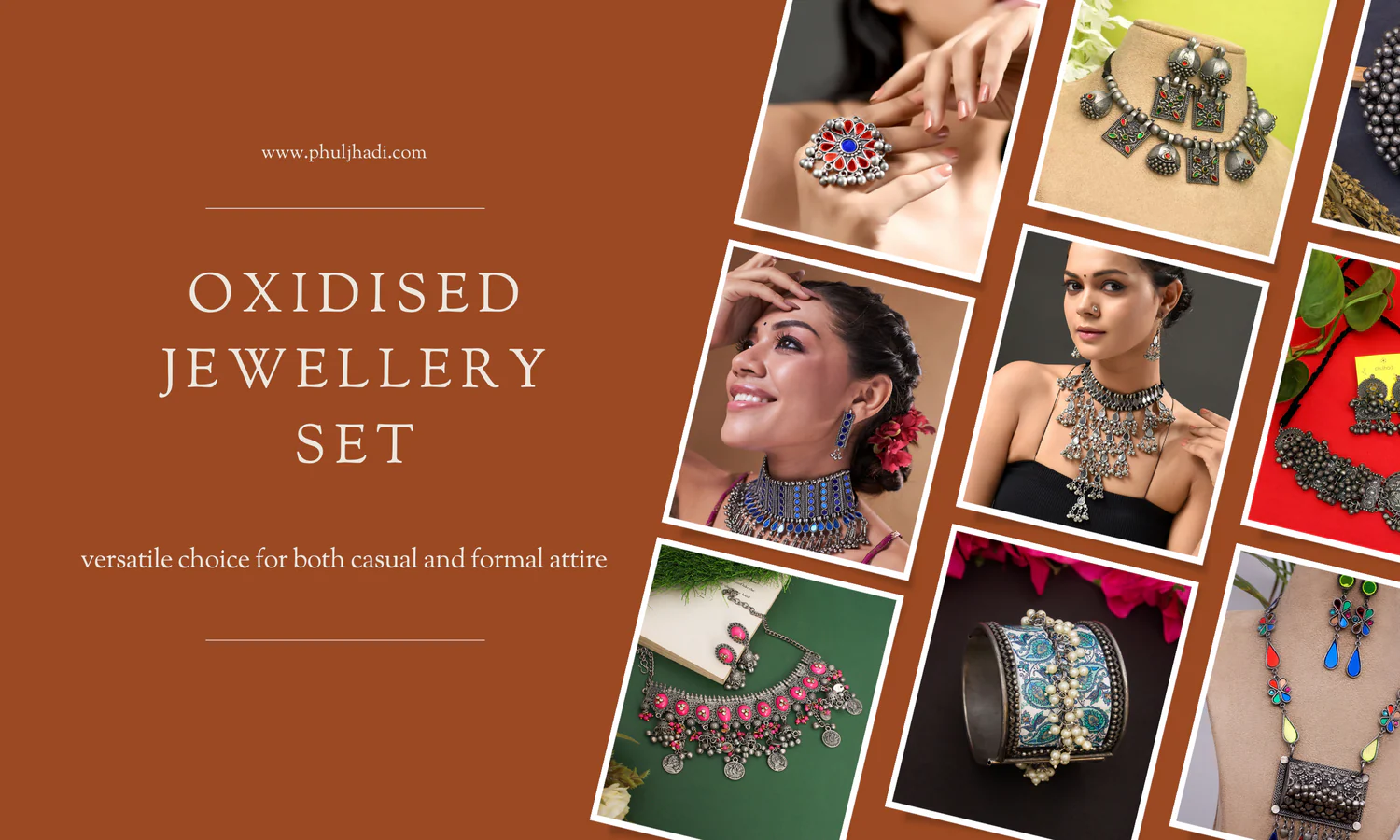
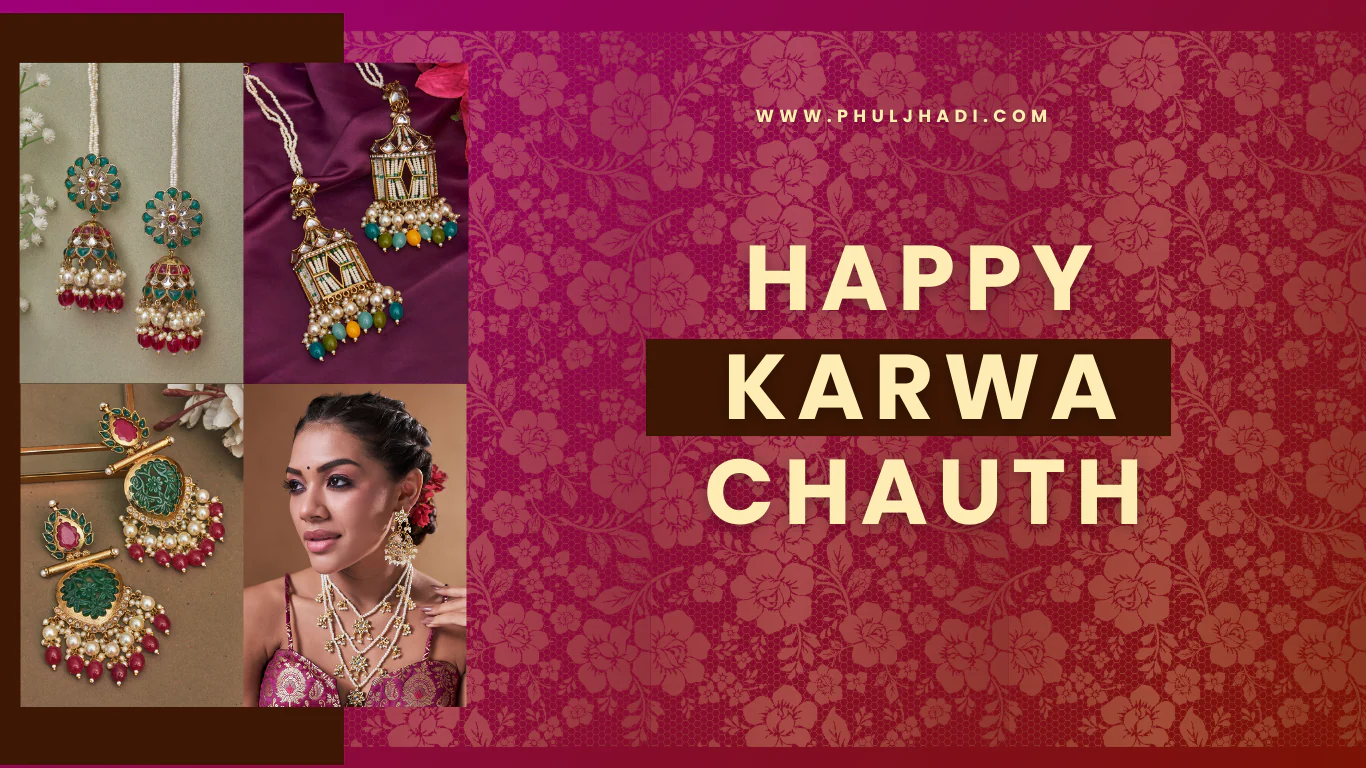
Oxidised jewellery sets comprise of Necklace, matching pair of earrings and sometimes rings, bracelets and maangtikka as well. They come in an array of designs, ranging from delicate and feminine to bold and statement-making. They showcase a huge variety of styles, catering to diverse tastes and preferences. They also have a lot of Traditional designs, contemporary interpretations which fuses modern designs with vintage charm. Few of the designs from Phuljhadi's array are below :